Computer vision and recognition
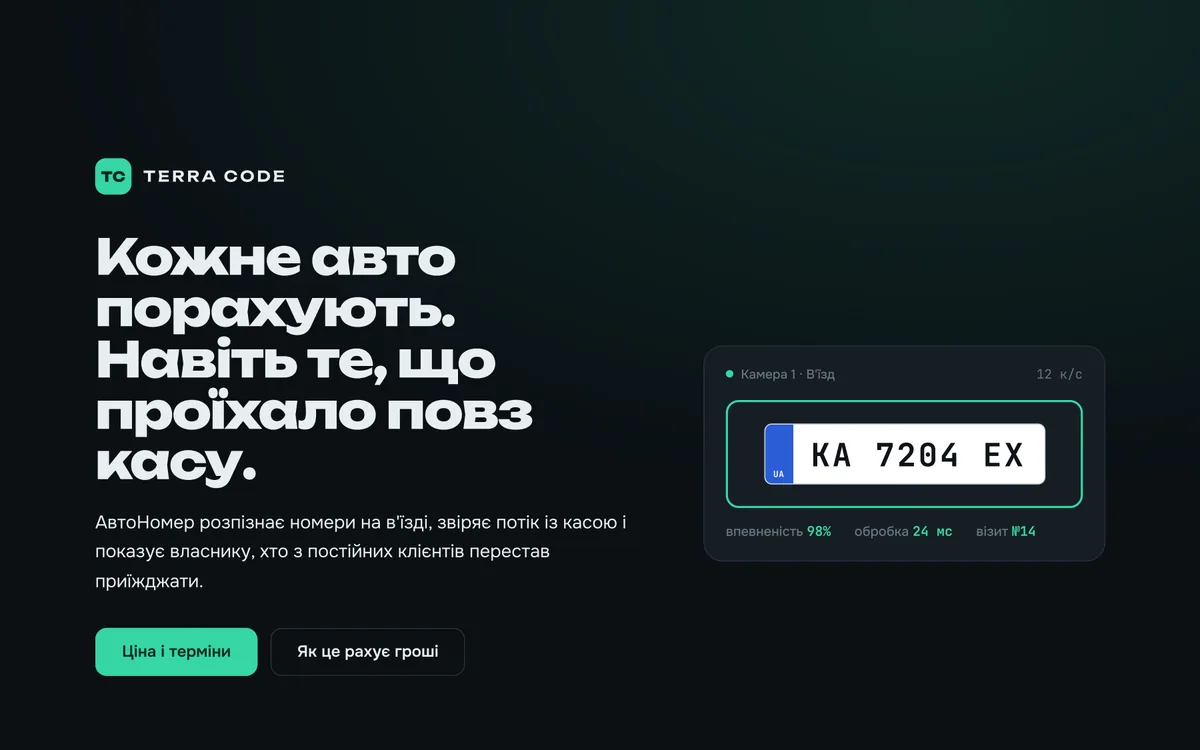
Licence plate recognition at the entrance, people counting, quality control on a line. Camera, recognition model and integration with your barrier or accounting system.
Software
Custom software makes sense when the ready-made option genuinely does not fit — not when someone simply wants their own. We start by asking whether an existing product already solves your problem, and only then talk about building. If it does, we will say so and pass on the project.
What it includes
Licence plate recognition at the entrance, people counting, quality control on a line. Camera, recognition model and integration with your barrier or accounting system.
Whatever currently lives in spreadsheets and three group chats: requests, stock, schedules, access. With roles, change history and permissions that do not hand out more than needed.
Connecting things with no ready-made connectors: accounting systems, CRMs, bank statements, hardware, supplier APIs.
Documentation, access and code on your side. It must be possible to pick the system up without us — and we verify that at handover rather than promising it.
When you need this
When you do not
If a twenty-dollar-a-month product already solves it, that is exactly what we will tell you instead of selling development. A custom system costs more than the build: someone has to maintain it afterwards.
Related work
FAQ
It depends on the number of cameras, the shooting conditions (night, rain, entry angle) and where the result has to go. So the first step is a short pilot on one camera with accuracy measured on your actual site — and the price of the full system is quoted after that.
Because the gap between a pilot on one point and a system across fifteen with accounting integration is tenfold. We quote after the audit and fix that number in the contract, rather than naming an attractive figure and revising it later.
You do. The repository is registered to your company from day one, together with server access.
You keep working code from the last completed iteration plus its documentation. That is exactly why we work in two-week cycles: at any moment there is a result you can take and hand to another team.
Next step
Twenty minutes of conversation: you describe the situation, we tell you what can realistically be done, in what timeframe and at what cost. No forty-slide decks.